
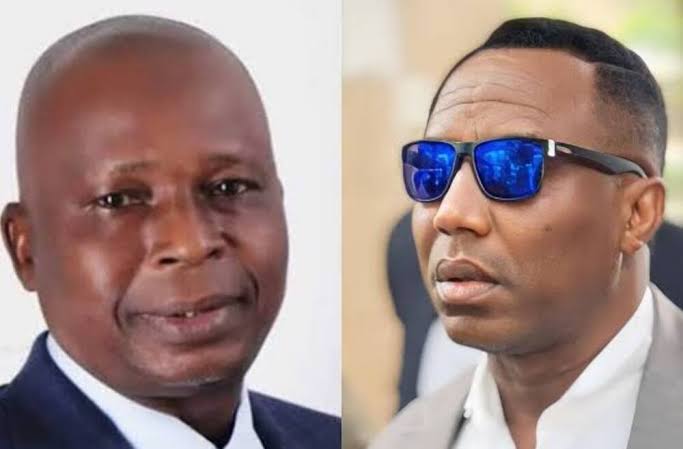

The Attorney-General of the Federation and Minister of Justice, Lateef Fagbemi (SAN), on Tuesday personally appeared before the Federal High Court in Abuja to lead the prosecution in the criminal trial of publisher and former presidential candidate, Omoyele Sowore.
Fagbemi’s appearance before Justice Mohammed Umar drew significant attention as he led a team of senior prosecutors, including the Director of Public Prosecutions of the Federation, Rotimi Oyedepo (SAN), Akinlolu Kehinde (SAN), and other members of the prosecution team.
Sowore, the publisher of Sahara Reporters and former presidential candidate of the African Action Congress (AAC), is facing charges filed by the Department of State Services (DSS) over social media posts in which he allegedly referred to President Bola Tinubu as “a criminal” on his X (formerly Twitter) and Facebook accounts.
The charges include criminal defamation, cyberstalking and incitement.
AGF Opposes Defence Application
During Tuesday’s proceedings, the Attorney-General urged the court to reject an application by the defence seeking to compel the Director-General of the DSS, Oluwatosin Ajayi, to appear and testify in the case.
Fagbemi argued that the application lacked merit and was merely an attempt to delay the proceedings.
According to him, the DSS had already demonstrated its willingness to cooperate with the defence by making one of its officers available to testify during the trial.
He maintained that requiring the DSS Director-General to personally appear before the court would serve no useful purpose and would unnecessarily prolong the proceedings.
The prosecution therefore urged the court to allow the trial to proceed without further interruptions in the interest of speedy justice.
The defence, however, insisted that additional witnesses, including the DSS Director-General, were necessary to properly challenge the allegations against Sowore.
After hearing arguments from both parties, Justice Mohammed Umar adjourned the matter for further proceedings.
Background to the Trial
The prosecution arose from a series of social media posts in which Sowore described President Tinubu as “a criminal.”
Following investigations by security agencies, the DSS filed charges bordering on criminal defamation, cyberstalking and related offences.
Sowore has consistently denied the allegations and pleaded not guilty to all the charges.
Earlier in the proceedings, the Federal High Court dismissed Sowore’s no-case submission, holding that the prosecution had established a prima facie case requiring him to enter his defence.
The court subsequently directed the defendant to open his defence, paving the way for the current stage of the trial.
The proceedings have also featured arguments over documentary evidence and witness testimony, with the court ruling on several objections raised by both the prosecution and the defence regarding the admissibility of evidence.
Freedom of Expression Debate
The trial has continued to attract widespread public attention because it raises broader questions about the limits of freedom of expression, criminal defamation, cyberstalking laws, and the prosecution of online publications in Nigeria.
Attorney-General Fagbemi has consistently defended the government’s decision to prosecute the case, maintaining that criminal allegations must be resolved through the courts rather than public opinion.
He has repeatedly stated that “nobody is above the law” and emphasised that the judiciary remains the appropriate institution to determine the guilt or innocence of any person facing criminal charges.
The case is expected to continue on the next adjourned date as the defence begins presenting its evidence.